
The Juice on the Steering Wheel
In the heat of July, the valley's cherry orchards send their fruit to the highway shoulder, and the road remembers those who stop.
The shade cloth is up before the valley floor begins to cook. It is black mesh stretched over four posts and held down at the corners with cinder blocks, and under it the air keeps a little of the night. The woman who minds the stand is already at the table, filling the flats. She works from the back of a pickup truck, sorting cherries by the handful — the dark reds into one flat, the yellow ones with a red cheek into another, the split ones and the bird-pecked ones into a bucket she will take home.

The highway is close enough that by mid-morning the heat comes off it in a steady shimmer, and the semis that pass seem to float for a second before they are gone. The big trucks do not slow. They are hauling apples from the other side of the mountains, or logs, or empty trailers, and they hold their speed and their lane. The pickups are the ones that turn. A man in a work truck taps his brakes, swings wide, and pulls in hard, and the dust rolls off the shoulder and settles on the flats before he kills the engine.
The stand is not much: a plank table, the flats stacked on it, a spring scale, and a metal cash box with a hasp and a padlock. The price is written on a scrap of cardboard, and the sun has faded the marker, so people lean over to read it or just ask. She weighs the cherries into paper bags, and the bags are already stained at the bottom before anyone has driven off. A jar of change sits at one end of the table, and a customer with exact change does not have to wait for anything.
Under the shade cloth the air smells of cherry — sweet, a little sour, with the heavier note of crushed fruit where a flat was set down too hard. Bees work the edge of the table and a wasp patrols the jar of change. The cloth stirs when the wind comes up, and the light on the flats moves from red to deeper red as the morning wears on.

There is a rhythm to the day. The early customers are the ones who know the stand is here and wait for it each July. They buy in flats, two or three at a time, and lift them into the back of a truck to ride under a rope and a tarp. Then the road empties, and the woman sits in the shade and watches the heat rise off the asphalt. Then the out-of-state plates start, and the stand becomes one of the things those travelers will remember about this valley. They buy a single bag and eat it standing by the table, juice running down their wrists, the pits dropped into the dusty grass.
Most of the traffic does not stop. The road runs long and straight under the July sun, and it takes a particular frame of mind to brake for a roadside table of fruit. A station wagon full of kids goes past with the windows up and the air conditioning on. A motorcycle goes past and the rider does not turn his head. The semis hit their lanes and hold them. The stand is a small thing in a big country; it asks to be noticed and then lets the rest of the world go by.

Behind the stand the orchard rows climb a little way up the valley wall, on the dry side of the mountains where the grass is brown by July and the orchards are green only where the water runs. The trees go back a long time, planted by people who came west and stayed because the water was there if you worked to move it. The cherries are the part of that work that reaches the road — the part that gets handed across a table, weighed into a paper bag, and eaten in a car that is already pointed somewhere else.
By late afternoon the sun drops behind the west ridge and the highway falls into shadow. The woman stacks the empty flats, counts the box, and pulls the cinder blocks off the cloth. Fifty miles down the road, a driver who stopped at noon is still tasting it — reaching into the paper bag one-handed, spitting pits into the cup holder, the juice drying on the steering wheel in dark sticky streaks. He will wipe it off by the next town, or he will not, and either way the valley is behind him. The stand has folded up for the night, but the day is still under his thumb — sweet, quick, and gone.
From the shop
Picked for this story
Floral Puff Sleeve Ruffle Hem Babydoll Dress
$27.41
Justin Sawyer Wide Brim Fedora Hat
$78.98
Mia Lava Verde Gloss Sunglasses
$127.00
Floral Split Neck Long Sleeve Blouse
$12.19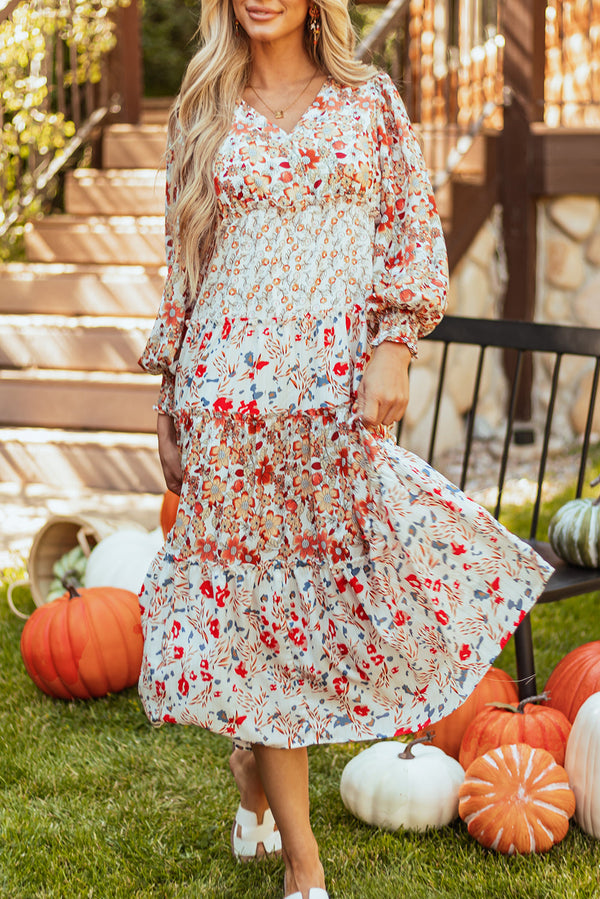
Floral V-Neck Ruffle Long Sleeve Midi Dress
$33.32
Solid Ribbed Knit Mock Neck Pullover Top
$12.53
Colorblock Open Front Pocketed Cardigan
$25.73
Stripe Half-Zip Drop Shoulder Sweater
$26.20Read next
More from On the Road
The Two-Lane Arrives
The interstate saves hours; the two-lane spends them on country. They are two answers to one question.

Saturday Night at the Small Town Rodeo
The lights show up first, then the dust, then the whole town — and you are only passing through.

The Forest Road by the Clock
A truck leaves the highway at dawn, crosses a creek, takes a wrong turn, and finds pavement again as the light fails.