
The Two-Lane Arrives
The interstate saves hours; the two-lane spends them on country. They are two answers to one question.
The two-lane is the better road for anyone who wants to arrive somewhere rather than just get there. It is the road of the north Pacific coast, where the ocean shows between hemlock trunks and hides again, and of the high desert, where the asphalt runs straight over a basin floor and the next town is a water tower on the horizon. It is also the road that begins where the interstate ramp ends, past a grain elevator, along a river the four-lane never sees.
The interstate is a machine for covering distance, and it is very good at it. The two-lane is a machine for covering country. On the two-lane the speed limit is lower and nobody is in a hurry to raise it. The road turns where the river turns, drops into shade, climbs into sun. In canyon country, the two-lane fits the contours; the interstate blasts through the same rock in a straight line, and the rock is only a wall to look at.

What the two-lane gives
The two-lane gives a traveler places to be. A roadside stand with stacked crates of whatever is in season—the person running it knows the variety, and will say which one to eat first. The small towns that the interstate routed around still have a main street with a café, a feed store, a post office with the flag out. The road serves them; it does not simply pass them. In one of those towns, at midday, the café fills with people who have driven in from the ranches that the two-lane reaches and the interstate does not. Nobody is in a hurry, because hurry left with the four-lane.
In the high mountain valleys, the two-lane runs among hay meadows and cottonwoods, and at one crossing an irrigation ditch sends water over the pavement. A driver slows to judge the depth. The interstate would have bridged it; the two-lane asks for judgment. On the north Pacific coast, the road curves with the cliff and the ocean is a sudden brightness at the end of every curve. The driver works, but the work is the point.
The two-lane crosses a mountain pass neither too high nor too famous. The guardrail is old, the pavement is patched, and at the top there is a wide place to pull over. A driver who stops there sees the valley behind and the valley ahead, and knows exactly where the road has been. No interstate exit gives that. On the high plains, the two-lane runs beside a fence line for a long stretch before it bends; the fence is a kind of companion, and the horizon is always there, and after a while the distance stops being a number and becomes a shape.

The interstate serves destinations. The two-lane serves the country between them. That is its argument, and it is a strong one: anyone who has come down out of a pass or slowed for a herd crossing a county road already knows how it ends.
But the interstate is not wrong
The interstate is not wrong. It is honest about what it is for: moving people and freight across a continent without incident. It has wide shoulders, clear signage, predictable curves. It is engineered for the average driver, and most drivers are tired, distracted, or both. The two-lane is engineered for the country, which is not the same thing. At three in the morning, on a straight two-lane across the Great Basin, there is no median, no shoulder wide enough to stop on, no next exit. The headlights of an oncoming truck seem closer than they are, and the rumble strip is the only warning when the wheels drift. Fatigue is a kind of alcohol, and the two-lane does nothing to protect a driver from it. In winter, the two-lane across a mountain pass can be closed by snow while the interstate stays open through a tunnel. The interstate is the road that gets through; the two-lane is the road that waits.
The two-lane is also the road of the loaded logging truck, the slow tractor, the tourist in an RV moving well under the limit. The interstate exists partly so that everyone else does not have to share the pavement with them. A broken-down vehicle on a two-lane blocks the road; on the interstate it is an inconvenience. The two-lane has no shoulders, no service plazas, no next exit. It is a road that asks attention at a time when attention is scarce.

The two-lane also takes longer, and time is a real cost. A trip that the interstate does in a day takes the better part of two days on the two-lane, and the extra day is not always a gift. There are runs—a load of fruit that has to reach the market by morning, a family trying to make the funeral—where the two-lane is a wrong turn. Unless the road itself is the reason for the trip, the interstate is the honest choice. But the reason a driver takes the two-lane is rarely stated so plainly. It is taken because the passenger wants to see the country, or because the driver remembers a junction from childhood, or simply because the map shows a thin line and the green spaces around it, and the thin line is the one that goes through them.
So the case for the interstate is real. It is the road that lets people keep appointments, deliver goods, and get home while the children are still awake. What it asks in return is that the country not matter. The two-lane asks the opposite: that the country matter, and that the traveler arrives with its dust on the car. There is no settling the argument on principle. A driver chooses, and the choice is visible in which ramp is taken. On a summer evening, on a two-lane that follows a river west, the light is low and the radio station fades, and the road ahead is still two lanes. That is the arrival.
From the shop
Picked for this story
Traveler Wooden Sunglasses in Black
$70.00
Faux Leather Button-Front Boxy Jacket
$28.34
Checker Denim Wide Leg Jeans
$28.42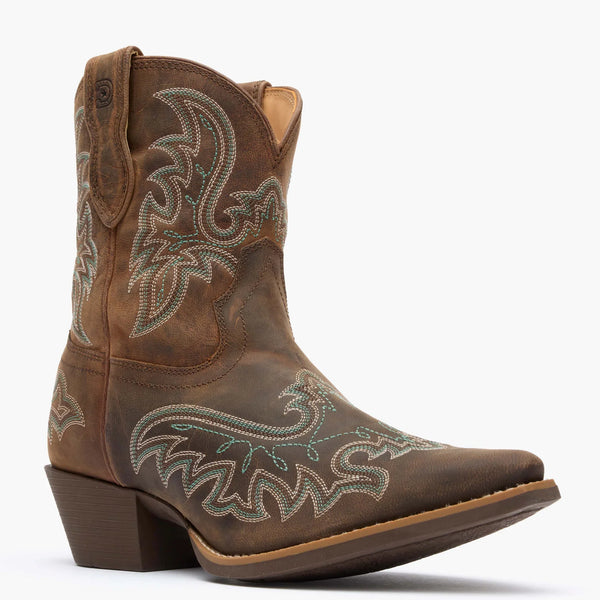
Durango Shyloh Pony Boot in Driftwood
$141.99
Plaid Contrast Stripe Edge Half-Placket Blouse
$15.02
Long Sleeve Crew Neck California Lettering Sweater
$18.99
Corded Knit Long Sleeve Top and Shorts Set
$24.31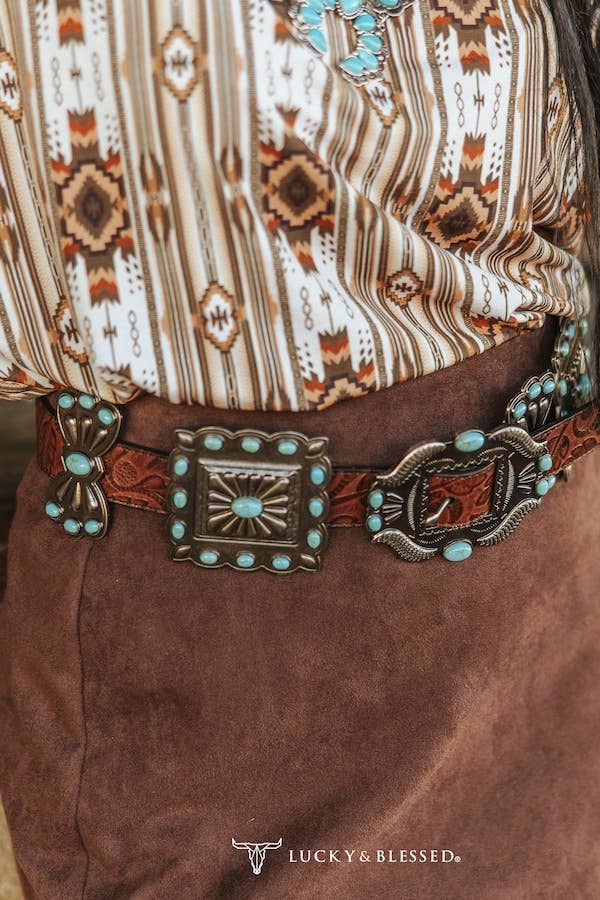
Brown Tooled Leather Turquoise Stone Concho Belt
$70.00Read next
More from On the Road
Saturday Night at the Small Town Rodeo
The lights show up first, then the dust, then the whole town — and you are only passing through.

The Forest Road by the Clock
A truck leaves the highway at dawn, crosses a creek, takes a wrong turn, and finds pavement again as the light fails.

Where the Old Highway Still Runs
Two hundred miles of US highway across the high desert, bypassed in 1962 and still there for the people who use it.